Can You Enjoy Dinner with Friends on Keto? Your Complete Social Dining Guide
Source: SiBio CKM on YouTube
You get a dinner invitation. Your first thought: I'm on keto — can I even go? That hesitation is one of the most common experiences for people trying to maintain a ketogenic diet in everyday social life. But it is based on a premise worth questioning.
Enjoying dinner with friends and staying on a ketogenic diet are not mutually exclusive. The challenge is real — but it is more specific and more manageable than it first appears. This guide breaks down the actual friction points and gives you a practical system for navigating almost any restaurant setting without abandoning your goals or your social life.
The Three Real Obstacles
Before getting to solutions, it helps to name what actually makes social dining harder on keto. There are three distinct friction points, and they require different responses.[1]
1. Hidden carbohydrates in restaurant food
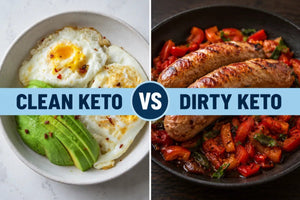
Sauces, marinades, dressings, and condiments are among the most common sources of unexpected carbohydrates when eating out. A dish that looks straightforward on the menu — grilled chicken, a steak, a salad — may arrive with a honey-based glaze, a starch-thickened sauce, or a dressing that contains more sugar than expected. Soups are frequently thickened with flour. "Light" options often compensate for fat reduction with added sugar. The carbohydrates in restaurant meals are often less visible than the carbohydrates in packaged food, where at least a label exists.
2. Social pressure
Keto is still unfamiliar to many people, and well-meaning friends or family may push back: "Just try a little," "It's a special occasion," "You're overcomplicating things." Long-term research on ketogenic diet adherence consistently identifies social events and family meals as among the most frequently cited barriers to sustaining the diet over time.[2] Navigating these moments without feeling awkward — or delivering an unsolicited lecture — requires both a clear mindset and a few prepared responses.
3. Menu uncertainty
Not every restaurant makes it easy to identify low-carb options. Menus may not list ingredients, staff may not know exactly how a dish is prepared, and making multiple special requests during a group dinner can feel uncomfortable. This uncertainty often leads people to either avoid social dining altogether or make off-plan choices because they could not quickly identify a better option.
Shift the Frame: From Restriction to Navigation
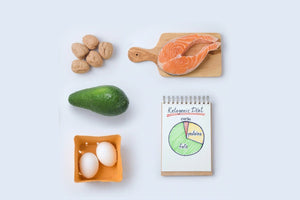
The most useful mindset change is this: keto is not primarily about what you cannot eat. It is about building meals around a consistent framework — fat and protein as the base, low-carb vegetables for volume and micronutrients, and careful attention to hidden carbohydrates.[2]
That framework translates to almost every restaurant environment. Most menus include at least one protein-forward dish that can anchor a keto meal. The challenge is mostly in the details: what the protein comes with, how it is prepared, and what is in the sauces and dressings.
Walking into a restaurant thinking "What can I work with here?" instead of "What am I not allowed to eat?" changes how the same menu reads — and how you feel about the meal before it even arrives.
How to Read a Restaurant Menu on Keto
A four-step approach works across most restaurant types:
Step 1: Anchor with protein
Look for dishes built around meat, fish, poultry, eggs, or seafood. Grilled, roasted, baked, or pan-seared preparations are generally safer than breaded, battered, or glazed options. The protein dish becomes the center of the meal, with everything else built around it.
Step 2: Address the sides
Most protein dishes come paired with a starch — rice, potatoes, bread, or pasta. Ask whether you can substitute with a side salad, extra vegetables, or simply have the starch left off. The majority of restaurants will accommodate this without difficulty, and many expect the request.
Step 3: Manage the sauces and dressings
Request sauces and dressings on the side so you control the amount used. For salads, olive oil with vinegar or lemon is the most reliable option. Creamy dressings and tomato-based sauces vary widely in sugar content; "light" or "low-fat" versions often contain more added sugar than their full-fat counterparts. When in doubt, asking the server about the sauce ingredients is a reasonable question at most restaurants.
Step 4: Choose drinks deliberately
Water, unsweetened sparkling water, black coffee, and plain tea are straightforward. If alcohol is part of the occasion, dry wines and spirits — neat or with plain soda water — tend to be lower in carbohydrates than beer, cocktails with juice or syrup mixers, or sweet wines. Even low-carb alcohol can affect how efficiently the body uses fat for fuel, so moderation remains relevant regardless of carbohydrate content.
Smart Ordering by Cuisine Type
Different restaurant types present different challenges. Here is a practical breakdown:
Steakhouse
Generally the most keto-accommodating environment. Protein is the centerpiece, sides are often listed separately, and substitutions are routine. Request double vegetables in place of the starch. Watch for glazes and compound butters that may contain honey or sugar, and ask how the protein is finished before ordering.
Italian
Pasta and pizza are the obvious obstacles, but most Italian restaurants also offer grilled fish, meat dishes, antipasto plates, and salads. A Florentine-style steak, grilled branzino, or a simply dressed caprese can work well. Ask if salads can be dressed with olive oil rather than a prepared dressing.
Japanese and sushi
Sashimi — raw fish served without rice — is one of the most naturally keto-compatible restaurant options available. Be mindful of soy sauce packets that contain added sweeteners, and avoid teriyaki, eel sauce, and spicy mayo, which are typically high in sugar. Edamame is a reasonable low-carb option while others order appetizers. Miso soup is generally low in carbohydrates but worth confirming if you are being careful.
Chinese
More challenging because many sauces are thickened with cornstarch and contain sugar. Steamed proteins, dry-fried or minimally sauced stir-fries, and dishes without batter coating offer the best options. Asking for sauce on the side, or requesting a dish be prepared without the standard sauce, is often accommodated at full-service Chinese restaurants.
Burgers and American casual
Most burger restaurants will serve the patty in a lettuce wrap or without a bun — this is a common enough request that many menus now list it as a standard option. Replace fries with a side salad, coleslaw (check for sugar in the dressing), or steamed vegetables. Watch for hidden carbohydrates in burger sauces, especially sweet or "special" house sauces.
Handling the Social Side
The food is one part of the equation. The social dynamics are another, and for many people, managing the conversation around their dietary choices is the harder challenge.
When friends or family comment on what you ordered, a brief and direct response tends to work better than a detailed explanation. "I've been eating low-carb — I feel much better this way" is usually enough to satisfy curiosity without opening a debate. You are not obligated to explain your approach to anyone, but having a one-sentence answer ready prevents the hesitation that can make a simple question feel more loaded than it is.
If you are organizing the dinner, choosing the restaurant gives you a meaningful advantage. Selecting somewhere that naturally accommodates your approach — a steakhouse, a seafood restaurant, or a menu-flexible casual spot — removes the friction before the evening even starts.
The broader principle: keto works best when it becomes part of your regular system rather than a recurring announcement. The less it disrupts the flow of a shared meal, the easier it becomes to maintain over months and years rather than days and weeks.[3]
Before You Arrive: Small Preparations That Help
A few things done before leaving the house can make the entire evening easier:
- Look up the menu in advance. Most restaurants post menus online. Knowing what you plan to order before you arrive removes the pressure of making decisions at the table while everyone else is ready to go.
- Have a small fat and protein snack beforehand if the restaurant has limited options. Arriving moderately hungry rather than very hungry makes it easier to order thoughtfully and avoid overeating whatever happens to be on the menu.
- Hydrate before going out. Mild dehydration can amplify the perception of hunger and make it harder to distinguish genuine hunger from thirst during the meal.
After the Meal: Understanding the Impact on Ketosis
Even a well-planned restaurant meal may include more carbohydrate than expected — a sauce that was sweeter than it appeared, a marinade you did not anticipate, or simply a larger portion than you estimated. This is not unusual, and it does not mean the evening was a failure.
What matters more than any single reading is the trend. A ketone measurement taken a few hours after the meal reflects a different picture than one taken the following morning. Looking at how your levels move across the day — rather than fixating on one number at one point in time — gives a more realistic view of whether your body returned to its usual metabolic pattern and how quickly.[2]
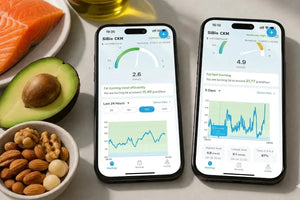
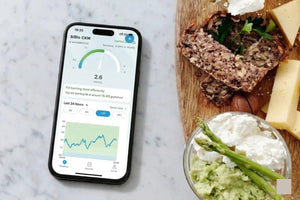
This is one context where Continuous Ketone Monitoring can add practical value: rather than guessing whether last night's dinner affected your ketosis, you can observe the actual trend and understand how your body individually responds to different restaurant meals over time. With SiBio CKM, each dinner out can become a learning opportunity — a way to identify which cuisines and which specific choices work best for your metabolism — rather than a source of ongoing uncertainty.
FAQ
Do I have to tell people I am on keto?
No. You can order what works for you without explaining why. Most people are focused on their own meals, and a simple "I'll have the salmon with extra vegetables instead of the rice" rarely requires elaboration unless you choose to offer it.
What if there is genuinely nothing keto-friendly on the menu?
This is uncommon but possible. Your options include ordering the least problematic item available, eating a small amount beforehand and ordering something light to participate in the social occasion, or accepting that this particular meal may include more carbohydrate than usual and planning to return to your regular approach at the next meal.
Will one restaurant meal break ketosis permanently?
No. A meal higher in carbohydrates may temporarily reduce ketone production, but the effect is not permanent. Returning to your usual approach at subsequent meals is generally sufficient to re-establish your metabolic state. The impact of a single meal — and how quickly your body recovers — varies individually and can be observed with ketone trend data over the following day.
Should I fast before going out to "make room" for the meal?
Extending a fast specifically to compensate for an anticipated restaurant meal is generally not necessary and can sometimes backfire — arriving very hungry tends to make it harder to order and eat moderately. Maintaining your usual eating schedule before the dinner is often the more practical approach.
What about special occasions where flexibility is unavoidable?
On occasions where some flexibility is part of the experience — a wedding, a significant celebration, travel — making a deliberate, conscious choice to be more flexible and returning to your regular approach afterward is entirely reasonable. Long-term keto success is built on consistency across many meals over many months, not perfection at every individual occasion.
Conclusion
A ketogenic lifestyle and an active social life are genuinely compatible. The friction is real — hidden carbohydrates, social pressure, and menu uncertainty each present specific challenges — but each one is navigable with the right approach.
The practical foundation is consistent: anchor meals around protein and fat, manage the details of sauces and sides, prepare before you arrive, and keep the focus on the social experience rather than making your dietary choices the center of the conversation. Long-term keto success depends on building a system that fits into real life — including dinners out with people you care about.
References
- National Center for Biotechnology Information (NCBI). (2025). The ketogenic diet: clinical applications, evidence-based indications, and implementation [StatPearls]. https://www.ncbi.nlm.nih.gov/books/NBK499830/
- Batch JT, Lamsal SP, Adkins M, Sultan S, Ramirez MN. (2020). Advantages and disadvantages of the ketogenic diet: a review article. Cureus, 12(8), e9639. https://pmc.ncbi.nlm.nih.gov/articles/PMC7480775/
- Crosby L, Davis B, Joshi S, et al. (2021). Ketogenic diets and chronic disease: weighing the benefits against the risks. Frontiers in Nutrition, 8, 702802. https://www.frontiersin.org/journals/nutrition/articles/10.3389/fnut.2021.702802/full
Disclaimer
This article is for educational purposes only and does not constitute medical advice, diagnosis, or treatment. Always consult a qualified healthcare provider before making significant changes to your diet, especially if you have an existing medical condition or take medications.
Author Information
This article was written by the SiBio Professional Health Content Team, focused on evidence-based metabolic health and ketogenic lifestyle education.
Last Updated: April 23, 2026