Long-Term Keto vs. Short-Term Keto: What’s the Difference?
Source: YouTube
Two people check their meters and see exactly the same number. One has been keto for five days. The other has been keto for five months. The reading looks identical — but underneath, two very different metabolic stories are playing out.
That gap — between how the body produces ketones and how it uses them — is the real story of long-term versus short-term ketosis. The number on the meter is only the surface.
What "short-term" and "long-term" ketosis actually mean
This is not a "winner versus loser" comparison. They are different phases of the same process, and asking which is "better" usually leads to the wrong choices.
Short-term ketosis describes the early transition window, often the first days through about the first month. Ketone production is rising, but the body is still rebuilding fluid balance, electrolyte stores, and the cellular machinery for using fat and ketones efficiently.
Long-term ketosis describes the adapted state, typically after several weeks to months of consistent low-carb eating. Production may settle, but it is utilization that has quietly transformed. The body has become more efficient at running on fat and ketones — often without dramatic readings to advertise the change.
Reading both phases the same way — by chasing the highest beta-hydroxybutyrate (BHB) number — can lead to bad decisions in either one.
Three things that quietly shift between the two phases
1) Production vs utilization: why a "lower" reading can mean a stronger body
BHB is the primary blood ketone people track. Early in keto, BHB readings often climb because production is rising faster than the body can use what it makes[5]. Light ketosis (around 0.5–1.0 mmol/L) is commonly reached within roughly 1–7 days, and many people enter the higher 1–3 mmol/L range within about 3–13 days[5].
Over time, that picture can change. As tissues become more efficient at burning ketones, circulating BHB may settle to lower values even when fuel use is more stable than before. The reading can come down because demand has caught up with supply — not because the diet has stopped working.
This is why a single reading is rarely a verdict, especially across two different phases. BHB levels also vary throughout the day with timing, food, exercise, and individual context, so trend-based interpretation is usually more informative than any one number[5].
2) Water and electrolytes: short-term turbulence, long-term steadiness
Short-term ketosis often comes with a cluster of symptoms commonly called "keto flu" — fatigue, headache, dizziness, nausea, irritability, and sometimes muscle cramps[1][2]. In one analysis of online consumer reports, the median onset was about 9.5 days from starting and the first week was the peak window before symptoms steadily declined[2]. A 2025 scoping review describes most symptoms emerging within 2–3 days of initiation and resolving within 2–4 weeks for many people[1].
The mechanism is not mysterious. As insulin falls, the kidneys release more sodium and water, which can drag potassium with them, driving the early dizziness, fatigue, and cramps[1]. Long-term ketosis is more settled because that flush has already happened. Hydration and electrolyte handling have re-stabilized at a new baseline.
So if early-stage keto can feel like wading through fog, later keto often feels closer to ordinary eating that just happens to be lower in carbs. That difference in experience — even when the meter looks similar — is one of the most concrete signs of adaptation.
3) Fuel preference: muscles slowly learn to prefer fat
The biggest long-term change is invisible at first. Over weeks to months, your muscles build up more of the machinery they use to burn fat, and they get noticeably better at running on fat at the same workload[4].
A clear example comes from ultra-endurance runners. In a study of athletes who had followed a low-carb, high-fat pattern for an average of about 20 months, peak fat oxidation during exercise was roughly 2.3 times higher than in matched athletes on a high-carb diet (1.54 g/min vs 0.67 g/min)[3]. During a 3-hour run, the keto-adapted athletes still used and replaced muscle glycogen in patterns broadly similar to the high-carb group[3]. In plain terms: they were drawing more day-to-day energy from fat and ketones, while glycogen stayed in reserve for the moments that really needed it.
For people who are not ultra-marathoners, the everyday version is more familiar: fewer mid-afternoon energy crashes, less sharp hunger between meals, steadier focus. These reports are common, though individual experience varies[4].
There is also a wider line of research worth knowing about. Beyond simply providing energy, ketones — especially BHB — appear to act as small signaling molecules that influence pathways linked to inflammation and cellular stress[6]. Whether those signals translate into clear, measurable long-term clinical benefits is still being studied, but it helps explain why long-term keto research often looks at outcomes beyond weight and appetite alone.
Why this matters in practice
A few practical implications follow from these shifts:
- The same reading does not mean the same metabolism. A 1.0 mmol/L reading on day 5 — when symptoms may still be peaking and electrolytes are settling — and a 1.0 mmol/L reading on month 5 are very different experiences inside the body.
- Short-term success does not predict long-term comfort. Some people produce high readings quickly but feel poor; others have modest early readings yet adapt smoothly because they manage hydration, electrolytes, and pacing carefully.
- Trend matters more than peak. What changes over weeks — your typical pattern across days — usually tells you more than any single highest number you ever saw[5].
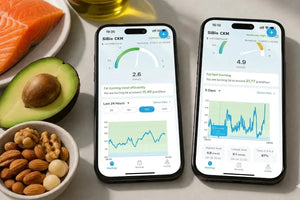
This is also where Continuous Ketone Monitoring tends to be most useful — not for chasing peaks, but for seeing how readings cluster around meals, sleep, and activity over time, which is hard to capture with isolated finger-stick checks.
A phased way to think about your own keto timeline
The following is a general framework, not a medical protocol. Talk with a clinician if you have a chronic condition, take medication, or are pregnant or breastfeeding.
Phase 1: Days 0–7 — establishing the basics
The goal is not high numbers. The goal is staying consistent enough for the metabolic shift to start.
- Keep digestible carbs low enough to consistently lower insulin (many beginners use under 50 g net carbs per day as a rough target).
- Prioritize sodium, potassium, and magnesium through whole-food sources or salted broth; reduced insulin commonly increases sodium and water loss[1].
- Expect symptoms like mild fatigue, headache, or brain fog. Reports often peak in the first week and steadily attenuate afterward[2].
Phase 2: Weeks 1–4 — stabilizing
Symptoms commonly attenuate during this window for many people[1]. Trends — not single readings — start becoming the most useful signal.
- Track patterns: post-meal dips, overnight rises, exercise effects.
- Avoid over-correcting one isolated low reading. Look at the trend across several days.
- Keep meals built around fat, moderate protein, and low-carb vegetables so the diet does not collapse into a meat-only or cheese-only pattern.
Phase 3: Month 1 onward — pattern recognition
This is where adaptation does its quiet work. Fat oxidation capacity may keep developing for weeks to months[4]. Long-term ketogenic programs in supervised settings have continued to show metabolic improvements over six months, including changes in body weight and lipid markers[7].
- Use trend data — not one number — to decide whether something is working.
- Keep food quality high; staying in ketosis on poor-quality processed foods is a different outcome than staying in ketosis on whole foods.
- Build a routine you can repeat for months, rather than a streak you have to defend day by day.
FAQ
My ketones are lower than they were three weeks ago. Did I leave ketosis?
Not necessarily. As tissues become more efficient at using ketones, circulating BHB may run lower at the same fuel intake[5]. Look at how you feel and how the trend behaves over a week, not at one isolated reading.
Why does keto feel harder in the first weeks?
Early-stage symptoms are commonly tied to fluid and electrolyte shifts rather than to running out of energy[1][2]. They tend to settle within a few weeks for many people.
Do I need very high BHB to get the benefits?
There is no single number that defines success for everyone. Trend stability and how the body responds to meals and activity often matter more than peak readings[5].
Can I lose adaptation after one off-plan meal?
Short-term shifts in glucose and insulin can briefly suppress ketone production. The deeper adaptation — fat-burning machinery, electrolyte handling — does not disappear from a single meal. Returning to your usual pattern is usually enough.
Is long-term keto safe?
Studies in supervised settings have reported sustained weight loss and improved lipid and glucose markers over six months[7]. Individual responses differ, especially for people with chronic conditions, so long-term keto is best done with periodic clinical review.
A practical reading rule
If you take only one rule from this article, make it this: read the trend, not the peak. Short-term ketosis and long-term ketosis can show similar numbers and very different metabolic stories. The difference shows up across weeks — in patterns of meals, sleep, exercise, and energy — rather than in any single moment on a meter.
Stable, repeatable habits, plus the patience to let your patterns reveal themselves, usually outperform any chase for a higher single reading.
References
- Skartun O, Smith CR, Laupsa-Borge J, Dankel SN. (2025). Symptoms during initiation of a ketogenic diet: a scoping review of occurrence rates, mechanisms and relief strategies. Frontiers in Nutrition, 12, 1538266. https://www.frontiersin.org/journals/nutrition/articles/10.3389/fnut.2025.1538266/full
- Bostock ECS, Kirkby KC, Taylor BV, Hawrelak JA. (2020). Consumer reports of "keto flu" associated with the ketogenic diet. Frontiers in Nutrition, 7, 20. https://pmc.ncbi.nlm.nih.gov/articles/PMC7082414/
- Volek JS, Freidenreich DJ, Saenz C, et al. (2016). Metabolic characteristics of keto-adapted ultra-endurance runners. Metabolism, 65(3), 100–110. https://pubmed.ncbi.nlm.nih.gov/26892521/
- Ma S, Suzuki K. (2019). Keto-adaptation and endurance exercise capacity, fatigue recovery, and exercise-induced muscle and organ damage prevention: a narrative review. Sports, 7(2), 40. https://pmc.ncbi.nlm.nih.gov/articles/PMC6410243/
- Fante C, Spritzler F, Calabrese L, Laurent N, Roberts C, Deloudi S. (2025). The role of β-hydroxybutyrate testing in ketogenic metabolic therapies. Frontiers in Nutrition, 12, 1629921. https://pmc.ncbi.nlm.nih.gov/articles/PMC12434970/
- Newman JC, Verdin E. (2017). β-Hydroxybutyrate: a signaling metabolite. Annual Review of Nutrition, 37, 51–76. https://pmc.ncbi.nlm.nih.gov/articles/PMC6640868/
- Dashti HM, Mathew TC, Hussein T, et al. (2004). Long-term effects of a ketogenic diet in obese patients. Experimental and Clinical Cardiology, 9(3), 200–205. https://pmc.ncbi.nlm.nih.gov/articles/PMC2716748/
Disclaimer
This article is for educational purposes only and does not replace professional medical advice, diagnosis, or treatment. Always seek the advice of your physician or another qualified health provider with any questions you may have regarding a medical condition or before making significant changes to your diet.
Author Information
This article was written by the SiBio Professional Health Content Team, focused on evidence-based metabolic health and keto education content.
Last Updated: May 8, 2026