Understanding Ketones: Your Body’s Backup Fuel Explained
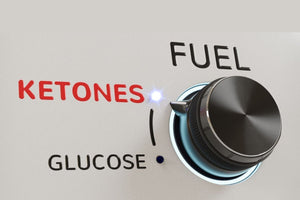
Ketones are often described as your body's backup fuel. That is a useful starting point, but the real story is a little more specific: ketones are molecules your liver makes when carbohydrate availability is low and the body needs another way to move energy around.
You may produce more ketones during fasting, prolonged exercise, low-carbohydrate eating, or a ketogenic diet.[1][2] For most healthy people, this is a normal metabolic adaptation. It is not the same thing as diabetic ketoacidosis, a dangerous medical emergency that can occur when ketones rise with severe insulin deficiency.[5]
What Are Ketones?
Ketones, also called ketone bodies, are small energy-carrying molecules made mainly in the liver. The three commonly discussed ketone bodies are:
- Beta-hydroxybutyrate (BHB): the main blood ketone marker people usually track during nutritional ketosis.
- Acetoacetate (AcAc): another ketone body produced during ketogenesis, the process of making ketones.
- Acetone: a breakdown product that can be exhaled in the breath.
In everyday keto tracking, BHB gets the most attention because it can be measured in blood and reflects circulating ketone availability. Strictly speaking, BHB is often grouped with ketone bodies in nutrition discussions even though its chemistry is slightly different from acetoacetate and acetone.[1]
How Your Body Makes Ketones
When carbohydrate intake drops, insulin levels usually fall and the body releases more stored fat. Fatty acids travel to the liver, where some are converted into ketone bodies. This process is called ketogenesis.[1]
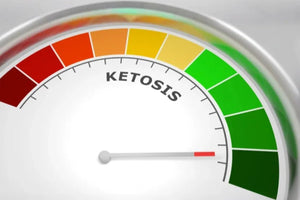
During ketogenic dieting, blood BHB is commonly used as one marker of the body's shift toward ketone production, though individual readings vary by diet, fasting duration, activity, sleep, stress, and adaptation level.[2] Many people on ketogenic diets move in and out of different ketone ranges during the day, so one reading is less useful than the overall trend.
What Ketones Do in the Body
Ketones can provide an alternative fuel for several tissues when glucose availability is lower. During prolonged fasting, research on human fuel metabolism shows that the brain can use ketone bodies as part of its energy supply, helping reduce the body's need to break down protein for glucose production.[3]
That does not mean ketones are automatically "better" than glucose or that they prevent all energy crashes. A safer way to say it is this: when someone is adapted to a low-carbohydrate or ketogenic pattern, ketones can become a meaningful part of the body's fuel mix. How a person feels still depends on total calories, electrolytes, sleep, training load, hydration, medications, and underlying health.
Why Ketone Levels Change
Ketone levels are dynamic. They can rise or fall across the day even when you are eating consistently. Common influences include:
- Carbohydrate intake: More carbohydrate usually reduces the need to make ketones.
- Fasting window: Longer time without food can increase ketone production in some people.
- Exercise: Activity can change both glucose use and ketone patterns.
- Sleep and stress: Hormonal changes may affect glucose and ketone readings.
- Keto adaptation: New keto eaters and long-term keto eaters may show different patterns.
This is why a single ketone number should not be treated as a pass-fail score. It is a snapshot, not the whole movie.
How to Track Ketones Without Overreacting
Blood BHB testing is commonly used when people want a direct ketone measurement. Urine strips and breath devices can also provide clues, but they do not always reflect current blood BHB in the same way.
For people who want more context, Continuous Ketone Monitoring may help show how ketones change over time instead of relying on isolated tests. Early feasibility research found that a subcutaneous continuous ketone sensor could track BHB patterns during 14 days of wear in healthy participants on low-carbohydrate diets, while the authors noted that more studies are needed in intended patient populations.[4]
The practical takeaway: use ketone data to understand patterns, not to chase perfect numbers.
Nutritional Ketosis vs. Diabetic Ketoacidosis
Nutritional ketosis and diabetic ketoacidosis are not the same thing. Nutritional ketosis is a controlled metabolic state that may occur during fasting or carbohydrate restriction. Diabetic ketoacidosis, often abbreviated DKA, is a medical emergency involving dangerously high ketones, acidosis, and usually high blood glucose, most often in people with severe insulin deficiency.[5]
Seek urgent medical care if you have diabetes or use glucose-lowering medication and develop very high ketones, vomiting, abdominal pain, confusion, severe weakness, rapid breathing, or concerning blood glucose changes. Do not try to manage suspected DKA with diet changes alone.
FAQ
Can ketones replace glucose completely?
No. Some cells, such as red blood cells, require glucose because they do not have mitochondria. During ketosis, ketones can supply part of the body's energy needs, but glucose is still needed for certain tissues and functions.
Is one ketone number all that matters?
No. Your trend, goals, symptoms, diet quality, and medical context matter more than one isolated ketone number. A reading can be useful feedback, but it should not be treated as a full health score.[2]
Is it normal to make ketones while sleeping?
Yes, mild overnight ketone production can happen because you are fasting while asleep. A ketogenic diet or longer fasting window may increase this pattern, but responses vary.
Do higher ketones always mean better results?
No. Higher ketones do not automatically mean better fat loss, better health, or better performance. Ketone readings are one feedback signal, not the whole outcome.
Conclusion
Ketones are not mysterious. They are part of the body's flexible fuel system, especially when carbohydrate availability is low. BHB, acetoacetate, and acetone each tell part of that story, with BHB being the most common blood marker for keto tracking.
The healthiest way to think about ketones is not to chase the highest number. It is to understand the pattern, keep the diet nutrient-rich, and respect safety boundaries, especially if you have diabetes, use glucose-lowering medication, or have a chronic medical condition.
References
- Rahimi N, Gupta S. (2026). Biochemistry, Ketogenesis. StatPearls, NCBI Bookshelf. https://www.ncbi.nlm.nih.gov/books/NBK493179/
- Daley SF, Masood W, Annamaraju P, Khan Suheb MZ. (2026). The ketogenic diet: Clinical applications, evidence-based indications, and implementation. StatPearls, NCBI Bookshelf. https://www.ncbi.nlm.nih.gov/books/NBK499830/
- Cahill GF Jr. (2006). Fuel metabolism in starvation. Annual Review of Nutrition, 26, 1-22. https://doi.org/10.1146/annurev.nutr.26.061505.111258
- Alva S, Castorino K, Cho H, Ou J. (2021). Feasibility of continuous ketone monitoring in subcutaneous tissue using a ketone sensor. Journal of Diabetes Science and Technology, 15(4), 768-774. https://doi.org/10.1177/19322968211008185
- Ghimire P, Dhamoon AS. (2026). Ketoacidosis. StatPearls, NCBI Bookshelf. https://www.ncbi.nlm.nih.gov/books/NBK534848/
Disclaimer
This article is for general educational purposes only and is not medical advice. Ketogenic diets and fasting may not be appropriate for everyone, especially people who are pregnant, have diabetes, take glucose-lowering medications, have kidney, liver, pancreatic, or gallbladder disease, or have a history of eating disorders. Always consult a qualified healthcare professional before making major dietary changes or changing medication, fasting, or monitoring routines.