Source: YouTube Shorts — SiBio CKM
You have been eating keto for several days. Carbs are down, fat is up. But how do you actually know when you have crossed the threshold into ketosis — and how do you know you are staying there?
This question comes up constantly among people starting a ketogenic diet. The answer is more nuanced than most guides suggest. Some of the signs commonly associated with ketosis are unreliable. Others are genuinely informative. And the difference between thinking you are in ketosis and verifying it matters more than many people expect — especially if your goal depends on consistent metabolic results.
This article walks through what nutritional ketosis actually means, which indicators are worth paying attention to, which are misleading, and how to build a clearer picture of your metabolic state over time.
What "Hitting Ketosis" Actually Means
Ketosis is a metabolic state in which the liver produces ketone bodies — primarily beta-hydroxybutyrate (BHB), acetoacetate, and acetone — from fat, and these ketones become a significant fuel source for the body and brain [1]. This shift occurs when carbohydrate intake is low enough and glycogen stores become sufficiently depleted that the body redirects its fuel production toward fat [1].
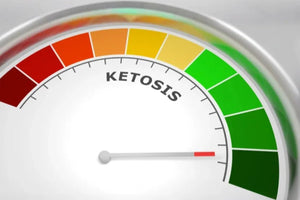
The commonly used threshold for nutritional ketosis is blood BHB at or above approximately 0.5 mmol/L [4]. Below this level, ketone production is occurring but is not yet substantial enough to be considered metabolically significant. Above it — typically in the 0.5 to 3.0 mmol/L range for everyday keto users — the body is generally considered to be in nutritional ketosis.
This threshold is not a sharp cliff. Ketone levels fluctuate throughout the day based on what you have eaten, how much you have moved, how recently you slept, and your individual metabolic profile. "Being in ketosis" is better understood as a metabolic zone than a fixed state you either reach or miss.
Signs That May Suggest You Are in Ketosis
Several changes in how you feel can provide informal signals that ketosis may be underway. These are not definitive on their own, but they are worth noticing — particularly when they appear together.
Reduced hunger and increased satiety between meals
One of the more consistent subjective reports from people who have fully adapted to ketosis is a meaningful reduction in hunger. Ketone bodies may have appetite-suppressing properties, and the shift away from glucose-driven insulin fluctuations can help stabilize hunger signals [2]. If you find that meals hold you for longer without urgency to snack, this may be a meaningful sign — particularly if it contrasts with how you felt in the first few days of carb restriction.
Steadier energy across the day
On a standard high-carbohydrate diet, energy can follow the rhythm of blood glucose peaks and dips — a noticeable rise after eating, followed by a trough that triggers hunger or fatigue. In established ketosis, many people describe a more even energy profile: fewer highs and lows, less post-meal drowsiness, and reduced dependence on food timing to maintain focus. This is not universal, and it tends to emerge after the adaptation period rather than during it.
Changes in breath
Acetone — one of the three main ketone bodies — is partly expelled through the breath. This can produce a distinctive sweet or slightly fruity odor that some people describe as unusual or mildly unpleasant. It is not caused by poor dental hygiene and typically does not respond to brushing. If you notice this change in breath alongside other signs, it may indicate ketone production is increasing. It is not, however, a reliable marker of the specific blood ketone level you are at.
Initial rapid weight change
In the first one to two weeks of a ketogenic diet, many people experience a noticeable drop in scale weight. This is largely driven by glycogen depletion and the associated loss of fluid that occurs as insulin falls and the kidneys excrete more sodium and water [3]. While this change is not fat loss, it can indicate that glycogen stores are being drawn down, which is a necessary precursor to sustained ketosis. The rapid initial weight change is distinct from the slower fat loss that may follow.
Signs That Are Often Misread as Ketosis Indicators
Several commonly cited "signs of ketosis" are less reliable than widely believed — and confusing them with genuine indicators can lead people to draw the wrong conclusions about their metabolic state.
The "keto flu"
Fatigue, headache, irritability, and brain fog during the first few days of carb restriction are commonly attributed to "entering ketosis." In reality, these symptoms are more closely associated with the transition away from carbohydrate — specifically, the rapid drop in insulin, the natriuretic and kaliuretic effects of the diet, and glycogen depletion — rather than with ketosis itself [3]. Many people experience keto flu symptoms before they have reached measurable ketosis, and some people enter ketosis without experiencing these symptoms at all. The presence or absence of keto flu tells you relatively little about whether you are actually in ketosis.
Urine color or general energy level
Changes in urine color during early keto are largely related to fluid shifts and increased urination from lower insulin levels — not a direct sign of ketone production. Similarly, feeling generally good or energetic during early carb restriction does not confirm ketosis; it may simply reflect lower post-meal blood glucose variability or motivation-driven changes in behavior.
How to Verify Your Ketone State More Accurately
If subjective signs are not reliable enough for your purposes, there are three measurement approaches that provide more direct information.
Blood ketone meters
Capillary blood BHB testing is currently considered the gold standard for assessing nutritional ketosis [4]. It requires a finger-prick blood sample and gives a reading in mmol/L. Readings above 0.5 mmol/L are generally considered consistent with nutritional ketosis. The main limitation is that a single reading only captures a snapshot — and ketone levels can shift substantially over the course of a day, making it easy to draw inaccurate conclusions from one measurement taken at an arbitrary time.
Breath ketone analyzers
Breath analyzers measure acetone in exhaled breath as a proxy for overall ketosis. They are reusable and do not require ongoing consumable costs, which makes them practical for frequent use. They are generally less precise than blood meters and can be affected by factors such as hydration and recent food intake, but they can still be useful for tracking relative trends over time.
Urine ketone strips
Urine strips detect acetoacetate in urine and are the most affordable and accessible option. They are most informative during early keto adaptation, when urinary acetoacetate excretion is higher. As individuals adapt to sustained ketosis, renal reabsorption of acetoacetate increases, reducing its urinary excretion and limiting the reliability of urine strips for assessing ketosis [4]. For this reason, urine strips are generally more useful for initial verification than for ongoing monitoring.
Why Single-Point Readings Can Mislead
Even the most accurate measurement methods can give a misleading picture if used as isolated data points. Blood BHB naturally varies across the day: it tends to be lower in the morning for some people after overnight fasting, may rise after exercise, and can dip after eating protein-rich meals that trigger a modest insulin response. A single low reading does not necessarily mean you are out of ketosis — and a single high reading does not mean you will remain there.
This is one of the key reasons that tracking ketone trends over time provides more actionable information than any individual reading. Understanding how your ketone levels respond to specific meals, sleep patterns, activity, and stress requires data across multiple time points — not just a snapshot taken once a day.
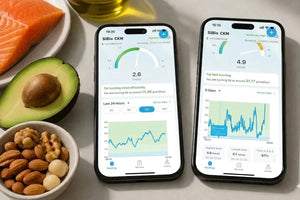
Tools like Continuous Ketone Monitoring from SiBio are designed for this kind of trend-based understanding — offering the ability to see how your metabolic state shifts in real time rather than relying on periodic manual tests.
FAQ
How long does it typically take to enter ketosis after cutting carbs?
For most people following a strict low-carbohydrate diet (under 20–30 grams of net carbs per day), initial ketosis usually develops within roughly two to seven days as glycogen stores are depleted [1]. A scoping review of ketogenic-diet initiation reported time to ketosis around four to five days in clinical comparison [3]. The timeline varies based on prior carbohydrate intake, physical activity level, and individual metabolism. If you have followed the protocol for more than two weeks without measurable ketosis, common practical issues — hidden carbs, lost electrolytes, short sleep, alcohol, or stress — are usually involved; see Struggling to Get Into Ketosis? 7 Common Reasons (and Fixes).
Can I be in ketosis without feeling any different?
Yes. Some people transition into ketosis without prominent subjective changes — particularly if the dietary shift was gradual or if they were already metabolically flexible. The absence of noticeable symptoms does not mean ketosis has not occurred; it may simply reflect a smoother transition than average.
Does exercise help you enter ketosis faster?
Physical activity can accelerate glycogen depletion, which may help the body reach the threshold for ketone production more quickly. Low-to-moderate intensity exercise is generally more effective for this purpose than high-intensity training, which can sometimes temporarily suppress ketone production due to increased lactate and cortisol responses. Exercise is a supportive factor, not a shortcut that bypasses the dietary carbohydrate restriction.
Why did my ketone reading drop even though I stayed strict with my diet?
Many factors can cause temporary dips in ketone readings: a protein-rich meal, stress-related cortisol release, a poor night of sleep, or simply the timing of your measurement relative to your last meal. A single lower reading after a period of consistent ketosis is usually not cause for concern — what matters more is the overall pattern over several days.
Is a higher ketone reading always better?
Not necessarily. For most people pursuing general health or weight management goals, nutritional ketosis in the 0.5–2.0 mmol/L range is considered sufficient. Very high ketone readings (above 3–5 mmol/L) in the context of a standard ketogenic diet are not common and are not a reliable indicator of better results. Extremely high readings (above 10 mmol/L) may indicate diabetic ketoacidosis in people with diabetes — a serious medical condition that requires immediate attention and is distinct from dietary ketosis.
Conclusion
Knowing when you have really hit ketosis requires more than relying on how you feel. While certain subjective signals — steadier energy, reduced hunger, changes in breath — can suggest that ketosis may be underway, they are not reliable enough to verify your metabolic state with confidence. Measuring blood BHB directly provides the most accurate single-point reading, but a single measurement only tells part of the story. Understanding how your ketone levels move in response to your actual choices — meals, sleep, activity — over time is what turns a number into genuinely useful information.
References
- Daley SF, Masood W, Annamaraju P, Khan Suheb MZ. (2026). The Ketogenic Diet: Clinical Applications, Evidence-based Indications, and Implementation. StatPearls [Internet]. Treasure Island (FL): StatPearls Publishing. https://www.ncbi.nlm.nih.gov/books/NBK499830/
- Gibson AA, Seimon RV, Lee CMY, et al. (2015). Do ketogenic diets really suppress appetite? A systematic review and meta-analysis. Obesity Reviews, 16(3), 285–301. https://pubmed.ncbi.nlm.nih.gov/25402637/
- Skartun O, Smith CR, Laupsa-Borge J, Dankel SN. (2025). Symptoms during initiation of a ketogenic diet: a scoping review of occurrence rates, mechanisms and relief strategies. Frontiers in Nutrition, 12, 1538266. https://www.frontiersin.org/journals/nutrition/articles/10.3389/fnut.2025.1538266/full
- Fante C, Spritzler F, Calabrese L, Laurent N, Roberts C, Deloudi S. (2025). The role of β-hydroxybutyrate testing in ketogenic metabolic therapies. Frontiers in Nutrition, 12, 1629921. https://pmc.ncbi.nlm.nih.gov/articles/PMC12434970/
Disclaimer
This article is for educational purposes only and does not replace professional medical advice, diagnosis, or treatment. Always seek the advice of your physician or another qualified health provider with any questions you may have regarding a medical condition or dietary change.
Author Information
This article was written by the SiBio Professional Health Content Team, focused on evidence-based metabolic health and keto education content.
Last Updated: April 20, 2026