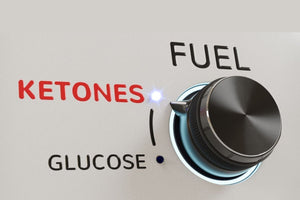
How Carbohydrates Suppress Ketone Production
Carbohydrates are the most direct factor that impacts ketosis. Here’s what you need to know:
- Consuming more than 50g net carbs in one sitting can lower blood ketones by up to 1.5 mmol/L
- This drop can persist for up to 12 hours
-
Mechanism:
- Carb intake raises blood glucose
- Insulin is released to lower it
- Insulin blocks fat breakdown, which reduces ketone production by over 70%
Pro tips to minimize impact:
- Keep net carbs under 30g/day
- Choose leafy greens for carbs + fiber
- Watch out for hidden sugars in sauces (3–5g per tablespoon)
- Consider apple cider vinegar 90 minutes post-meal to reduce glucose spikes
How Exercise Enhances Ketone Levels
While carbs lower ketones, exercise helps raise them — if done strategically:
-
High-intensity interval training (HIIT) rapidly depletes glycogen
- Example: 30 sec sprint + 90 sec rest × 5 rounds
- MCT oil (1 tbsp post-workout) can increase ketone production by over 50%
-
Avoid long, intense cardio
- It raises cortisol, which elevates glucose and suppresses ketones
- Stick with moderate-duration aerobic activity for best results
How Stress and Sleep Influence Ketone Levels
Two often overlooked factors—stress and sleep—play a major role in ketone stability:
-
Chronic stress increases cortisol
- Cortisol raises glucose and breaks down muscle tissue
- Both reduce ketone synthesis
-
Poor sleep (<6 hours) leads to:
- Lower blood ketones (by ~0.7 mmol/L)
- Increased insulin resistance
How to optimize stress & sleep:
- Try 4-7-8 breathing daily (inhale 4s, hold 7s, exhale 8s)
- Take 400mg magnesium glycinate at night
- Set bedroom temperature to ~65°F (18°C)
Conclusion: How to Stabilize Ketone Levels
To support consistent ketone production and stay in fat-burning mode, focus on:
- Low-carb eating
- Strategic workouts
- Stress management routines
- High-quality sleep
Together, these habits form a stable foundation for ketosis.
Always consult a healthcare provider if you have medical conditions before making major dietary or lifestyle changes.
FAQ
Q: Can a single high-carb meal kick me out of ketosis?
A: Yes. A meal high in carbs can suppress ketone production for 8–12 hours or more, depending on your metabolic flexibility.
Q: How long should I fast to raise ketone levels?
A: A 16–24 hour fast can significantly boost ketones, especially when combined with low-carb eating beforehand.
Q: Does magnesium help with ketone stability?
A: Yes. Magnesium supports energy metabolism, muscle recovery, and quality sleep—all of which reinforce ketone production.