Article Highlights
-
Fat burning and ketosis are connected, but they are not the same thing.
-
Ketone levels show ketone changes, but they do not directly measure fat burning or fat loss.
-
Tracking ketone trends can help you understand how food, activity, and daily habits affect your body.
Ketosis, Fat Burning, and Body Fat Loss: What Is the Difference?
Laurie started with a familiar expectation: eating healthy and working out should mean her body was in "fat-burning mode." When her ketone readings did not always match that expectation, she began looking more closely at her routine.
There is one distinction worth keeping in mind: burning fat for energy and losing body fat are related but not the same thing. Your body uses energy throughout the day and can draw on both glucose and fat. That fat can come from food as well as your body's stores, so using it during a workout does not tell you how much body fat you have lost.
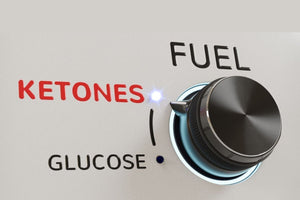
Ketosis describes increased availability of ketones, an additional fuel made by the liver when carbohydrate availability is reduced. It often develops with carbohydrate restriction or fasting, but it is not a switch that turns all fat use on. You can use fat for energy outside nutritional ketosis, too.
For Laurie, tracking offered a closer look at ketone levels than relying on how healthy a meal seemed or how hard a workout felt. The important boundary is that a ketone reading shows concentration at that moment, not fat-burning speed or body fat loss. Keeping those questions separate makes the data easier to use without expecting one number to explain everything.
Why Ketones Can Be Low Even When You Eat Low Carb and Exercise
The surprise in Laurie's experience was seeing low ketones at times when she felt she was "doing everything right": eating low carb and training. If you have had a similar moment, it helps to check the circumstances before deciding your routine is failing.
"Eating clean" does not specify how much carbohydrate you ate. Recent meals, actual carbohydrate intake, time without food, and activity can all influence the reading. A measurement after eating may look different from one taken before breakfast, even within the same routine.
Exercise can also change how ketones are produced and used. A lower value does not automatically mean you are using no fat, but it cannot prove that your body is using ketones more efficiently either. Sleep, stress, health, and medication context may also be relevant; the reading alone does not identify the cause.
For a reader in Laurie's situation, the useful next step is to notice what was happening around the measurement. Adding more fat, cutting needed protein, or extending a fast just to raise the number can distract from the original goal.
What Continuous Ketone Tracking Helped Laurie Notice

Before tracking, Laurie relied largely on her choices and effort to judge what she thought was happening in her body. Low-carb meals and regular training seemed like reasons to expect ketosis. The readings gave her something more specific to observe, and they did not always confirm that expectation.
She described seeing low values on some days despite those habits. At other times, she noticed differences that she associated with small changes, including food eaten the night before. The experience made her realize that what she expected and what she measured could be different.
Continuous Ketone Monitoring let her follow those changes across the day. The SIBIO monitor she used measures beta-hydroxybutyrate (BHB), a ketone, in interstitial fluid, the fluid surrounding cells. Laurie disclosed that SIBIO supplied the monitor featured in her video.
For her, seeing the readings made it easier to connect daily choices and how she felt with a visible ketone pattern. She also described the data as motivating. Those are meaningful parts of her personal experience, without establishing that tracking caused weight loss or better health.
Her account does not include the meal details or controlled comparisons needed to show why a particular change occurred. A difference after an evening meal is therefore something to explore again, rather than proof that the meal caused it.
The reader-facing lesson is to replace assumptions with observations, while staying clear about what was observed. Laurie could follow her ketone pattern; the monitor did not directly measure her fat-burning rate. SIBIO's system is for wellness tracking, not diagnosing or managing disease or replacing a clinical ketone-testing plan.
How to Interpret Your Ketone Patterns
You do not need to explain every rise and dip to learn something useful. Start with three habits:
- Look for patterns. Note when you ate or exercised and see whether a similar change appears on more than one occasion. A few simple notes can make a curve easier to understand.
- Compare similar situations. Use a consistent measurement method and compare readings taken under similar meal, fasting, and activity conditions. Comparing an after-dinner value with one after an overnight fast can create a misleading impression.
- Avoid chasing numbers. A higher reading is not automatically a better result. Keep your actual goal in view, whether that is a sustainable eating routine, energy for training, or longer-term body-composition change.
If, like Laurie, you notice a difference after changing dinner, treat it as a question to revisit. You do not have to label the food "bad" or change your entire plan on the strength of one reading.
Tracking should help you learn, not create pressure to satisfy an app. A fluctuation is not a score for discipline, and monitoring is not necessary for everyone following keto.
If you have diabetes or take medication that affects glucose, follow your care team's guidance before changing diet or fasting. Concerning symptoms, including vomiting, abdominal pain, unusual breathing, or confusion, need prompt medical assessment rather than interpretation through a wellness trace. NHS guidance on diabetic ketoacidosis provides further information.
Final Takeaway
For Laurie, the biggest shift was seeing that her ketone readings did not always match her expectations. Tracking gave her a way to notice changes and ask more informed questions about her routine.
Take that curiosity from her experience, rather than a target number to copy. Ketone patterns can add context, while progress toward your goals needs its own measures.
FAQ
How long does it take to enter ketosis?
It often takes a few days after substantially reducing carbohydrate intake, but it can take longer. Cleveland Clinic describes two to four days as a common range with daily carbohydrate intake of 20 to 50 grams, while emphasizing individual variation. Treat that as context, not a deadline. Entering ketosis is also different from longer-term adaptation.
Why are my ketones low even on keto?
Recent meals, carbohydrate intake, time without food, activity, and measurement timing can affect the result. As Laurie found, eating low carb and training do not guarantee the reading you expect. Look at the surrounding circumstances and repeated patterns before deciding your routine is not working.
Do higher ketone levels mean more fat burning?
Not necessarily. A higher reading means a higher ketone concentration, not a directly measured fat-burning rate. It does not tell you how much body fat you are losing. More is not automatically better, so avoid making the highest possible reading your goal.
How long does it take to see ketone changes?
You may notice changes within the same day, but timing varies with the person, meal, and activity. Seeing a change once is different from learning whether it repeats. Compare similar occasions instead of expecting every meal or workout to produce an immediate, predictable response.
Why do my ketone levels change throughout the day?
Meals, time between meals, activity, and other daily conditions can change the balance between ketones being made and used. Some fluctuation is expected; the cause of each change is not always obvious. Look at what was happening around the reading rather than judging every rise or dip separately.