Article Highlights
-
Jo recorded lower ketone readings than expected despite years of low-carb, mostly meat-based eating.
-
The surprise led her to reconsider her eating pattern, although the cause remained unconfirmed.
-
Continuous tracking gave her a way to investigate her assumptions alongside her daily habits.
What Did Jo Lamontagne Discover About Her Ketone Levels?

After years of low-carb, mostly meat-based eating, Jo Lamontagne expected ketone readings between 3 and 5 mmol/L. When she began using SiBio KS3, the highest readings she recalled were around 1 mmol/L, by her account.
She described eating fewer than 20 grams of carbs a day and estimated that about 95% of her diet consisted of animal foods. She had assumed that this eating pattern would produce higher ketones. Seeing different readings prompted her to reconsider that assumption.
Her interest extended beyond the number on the scale. After years of health difficulties, she wanted to understand how her body was responding to her diet.
“I can't just guess.” That realization led Jo to look more closely at her high-protein meals and question whether they were producing the response she expected. Monitoring had given her something specific to investigate.
What Does Optimal Ketosis Really Mean for Weight Loss?

Jo described her readings as falling short of “optimal ketosis.” Interpreting that concern requires separating a definition from an expectation.
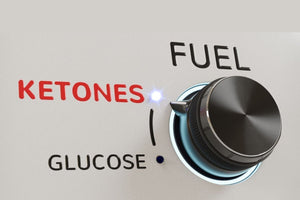
Beta-hydroxybutyrate, or BHB, is a ketone that the body produces as an alternative fuel. Nutritional ketosis is commonly described using blood BHB of about 0.5 mmol/L or above, a threshold used in ketogenic diet research. That blood-based definition needs appropriate context when interpreting a sensor that measures another body fluid.
It does not establish a universal best level for weight loss. Jo's hoped-for range was her personal expectation, rather than a target everyone needs to reach.
Ketone concentration also cannot directly quantify body fat loss. In a controlled feeding study of 17 men with overweight or obesity, switching from a baseline diet to a ketogenic diet increased circulating ketones without accelerating body fat loss. Calories and protein were held constant across the two diets.
This small, short study used a fixed diet sequence and did not test an optimal ketone target. It cannot predict everyone's long-term results, but it demonstrates that increased ketones and faster body fat loss need not occur together.
Why Were Jo's Ketone Levels Lower Than Expected?

Jo began wondering whether her protein intake was contributing to the difference. Her meals were high in protein, and she suspected that glucose production from protein was keeping her from reaching the levels she wanted.
Dietary protein provides amino acids, some of which can be used to make glucose through gluconeogenesis. However, eating protein cannot simply be equated with eating sugar. A study of eight healthy volunteers found that dietary protein made a limited contribution to glucose production after the meal tested. Those conditions cannot explain Jo's response, but they caution against assuming that ingested protein automatically becomes large amounts of glucose.
That leaves Jo's explanation as a hypothesis. Her account does not establish how much protein she consumed or demonstrate that it caused her readings. Meal composition, the time since eating, activity and individual responses are also relevant context. A ketone monitor does not directly measure gluconeogenesis.
Jo planned to add more fat to her meals, mentioning eggs and butter, and then see whether her readings changed. She had not reported the outcome of that adjustment in this video.
The useful distinction is between reconsidering a dietary assumption and confirming why a particular result occurred. Jo had reached the first stage; the explanation still needed investigation.
Can Higher Ketone Levels Trigger Autophagy?
Jo associated higher ketones with autophagy, the process through which cells break down and recycle their own components.
There is insufficient evidence to treat 1.5 mmol/L as a universal activation threshold. A six-month exploratory study in 121 adults with obesity examined autophagy in specific blood cells. Its findings do not establish whole-body autophagy or identify a ketone level that activates it.
A continuous ketone monitor cannot directly measure autophagy, so higher readings would not confirm the cellular changes Jo hoped for.
How Can Continuous Ketone Tracking Help You Understand Your Body?
Jo's proposed meal adjustment raised a practical question: would a similar change in her readings appear after comparable meals on different days? Reviewing the hours around a meal, alongside activity and sleep notes, offers a way to investigate.
The SiBio KS3 she used tracks BHB in interstitial fluid, the fluid surrounding cells. A continuous record lets users review readings before and after meals and check whether a walk, a workout or disrupted sleep coincided with a change.
A practical review can follow three steps:
- Record the circumstances. Note meal timing and composition, activity and sleep, rather than keeping only the ketone number.
- Compare similar occasions. Look at repeated meals or routines under reasonably comparable conditions. Several habits changing together make interpretation harder.
- Separate observations from explanations. A recurring change may suggest a question worth investigating, while an association alone cannot identify its cause.
Her experience also included a setup lesson. After pairing a new sensor, she found it still needed to warm up. Following the current instructions for activation, warm-up and connection helps ensure there are usable readings before drawing conclusions.
Useful patterns depend on repeated, comparable observations, rather than a fixed number of days. A sensor's wear period is not a proven minimum investigation time. KS3 supports lifestyle tracking; it is not intended for diagnosing, treating or monitoring disease, and it cannot replace medical judgment.
Final Takeaway
Jo's readings prompted her to reconsider assumptions about her diet. For readers, the practical lesson is to record meals and daily habits, compare similar situations, and keep explanations open until there is enough evidence. Her planned dietary adjustment had no reported outcome in the video.
FAQ
Why are my ketones low even when I eat fewer than 20g of carbs?
Carbohydrate intake alone does not determine your reading. Check whether your food record counts total or net carbs and note when the reading was taken relative to meals and activity. Look for a repeatable pattern before drawing a conclusion.
Can eating too much protein affect ketosis?
Protein intake may influence your ketone response, but a reading alone cannot establish that you are eating too much. Review your overall eating pattern and protein needs before making a reduction.
Should I change my diet if my ketones stay around 1 mmol/L?
That number alone is not a reason to change your diet. Consider your goals and the circumstances of repeated readings. If medical conditions or medication affect your dietary choices, discuss changes with your care team.
How long should I track ketones to identify meaningful patterns?
There is no universal observation period. Aim for multiple valid records of comparable meals or routines. If conditions keep changing, more days of data may still leave the explanation uncertain.